Mount Pleasant Community Food Forest
Designed by Permanent Yield. Planted by the community. Growing for generations. Start a Food Forest in Your Community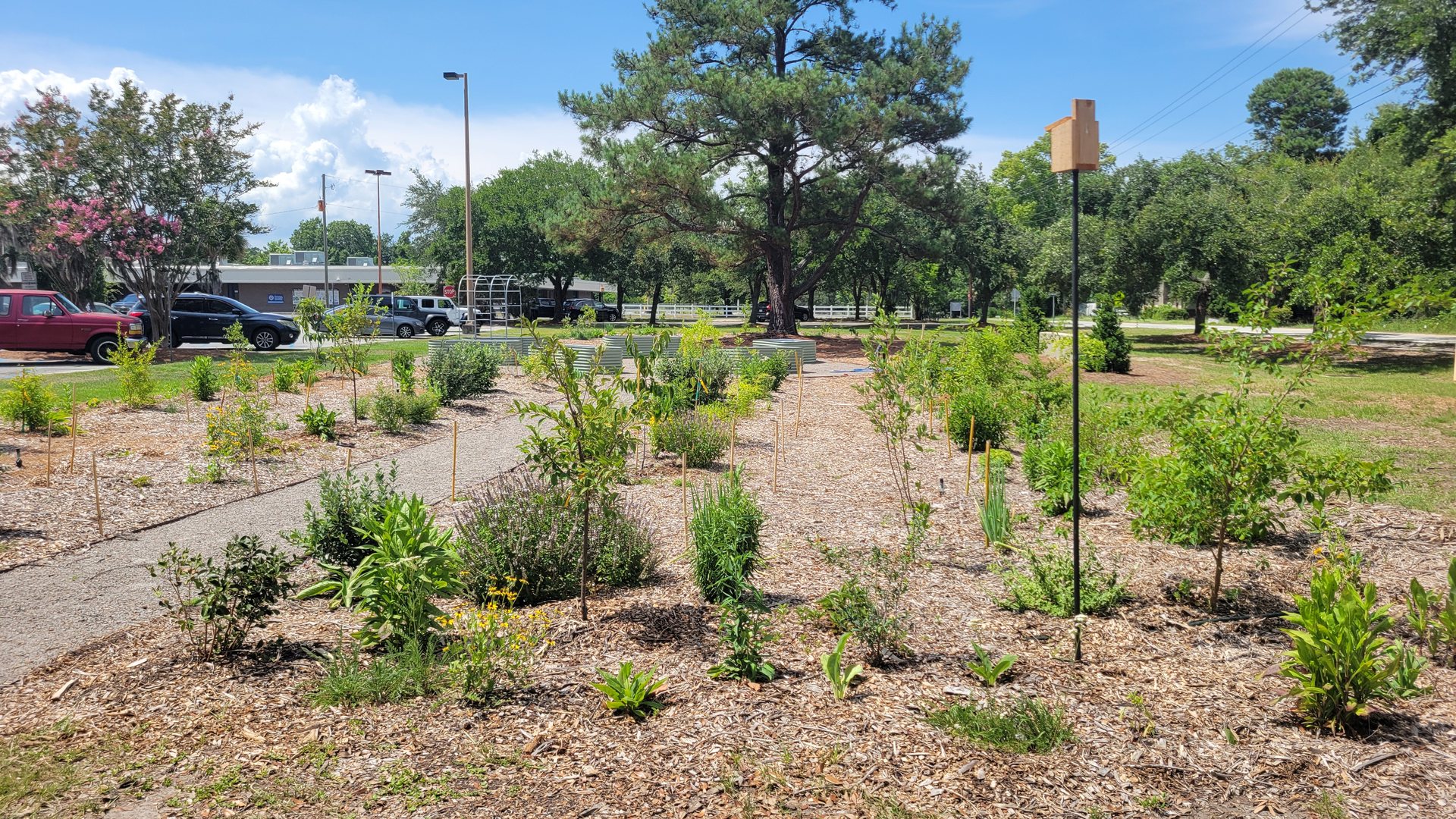
The Mount Pleasant Community Food Forest is a public food-producing landscape at the R.L. Jones Recreation Center in Mount Pleasant, designed by Permanent Yield and planted in spring 2026 by volunteers from across the Lowcountry. More than 100 fruit trees, shrubs, and native flowers are growing into a long-term community resource: free fresh fruit and vegetables, hands-on learning, and a place for people to gather and connect with the land.
Where to Find It and How to Visit
The Mount Pleasant Community Food Forest is located at the R.L. Jones Center, 391 Egypt Road, Mount Pleasant, SC 29464. It sits on public recreation grounds and is free and open to everyone, from sunrise to sunset.
During the growing season, the fruits and vegetables are open to all for harvest. Come walk the paths, learn the plants, and pick what is ripe. It is a shared community resource, so take what you will use and leave plenty for your neighbors.
A Town That Chose to Plant Food
Most public landscaping is ornamental: it looks tidy and gives nothing back. The Town of Mount Pleasant chose differently. They chose a landscape residents can harvest, maintain, and learn from for decades. As the trees mature, the food forest will produce fruit for anyone who visits, host gardening education alongside Belle Hall Elementary, and demonstrate what regenerative practices looks like at public scale.
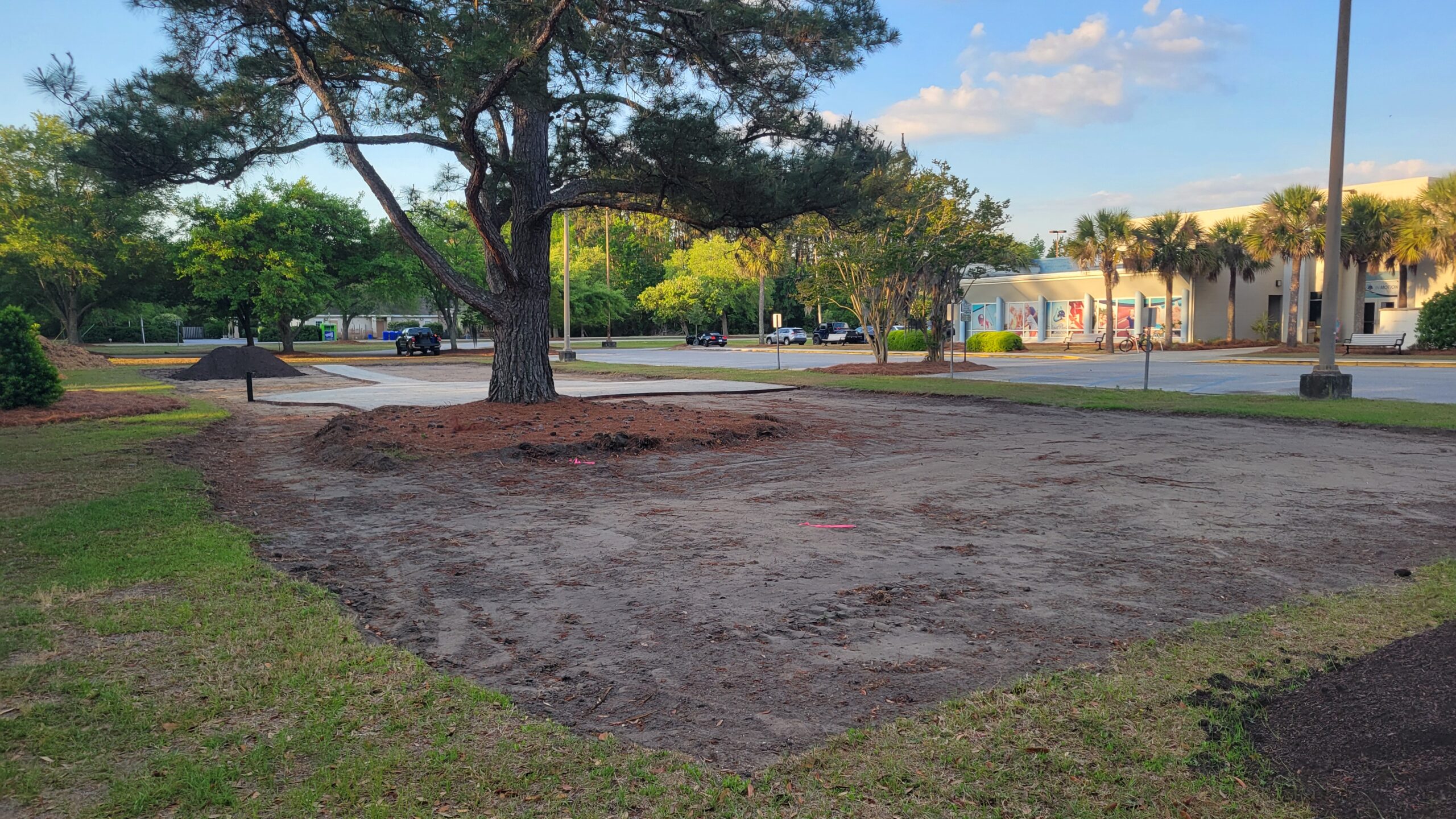
The site before planting — open lawn at the R.L. Jones Recreation Center.
What’s Growing
The planting list includes a diverse range of food producing trees and shrubs: fig, persimmon, loquat, plum, blueberry, blackberry, citrus, Asian pear, and pawpaw. These species were chosen because they produce reliably in our coastal climate with minimal intervention, meaning the forest gets more generous every year while asking less of the volunteers who tend it. In addition to the edible plants there is a wide variety of native plants – Sweet pepper Bush, St John’s Wort, Cut leaf coneflower, Mountain Mint, Black Eyed Susan, Blanket Flower, and many more. These flowers serve to support local pollinator species and increase the biodiversity within the landscape.
In addition to perennials there will be annual vegetable beds for the community to use. An additional area will serve as a demonstration of what an alternative lawn can look like in the lowcountry.
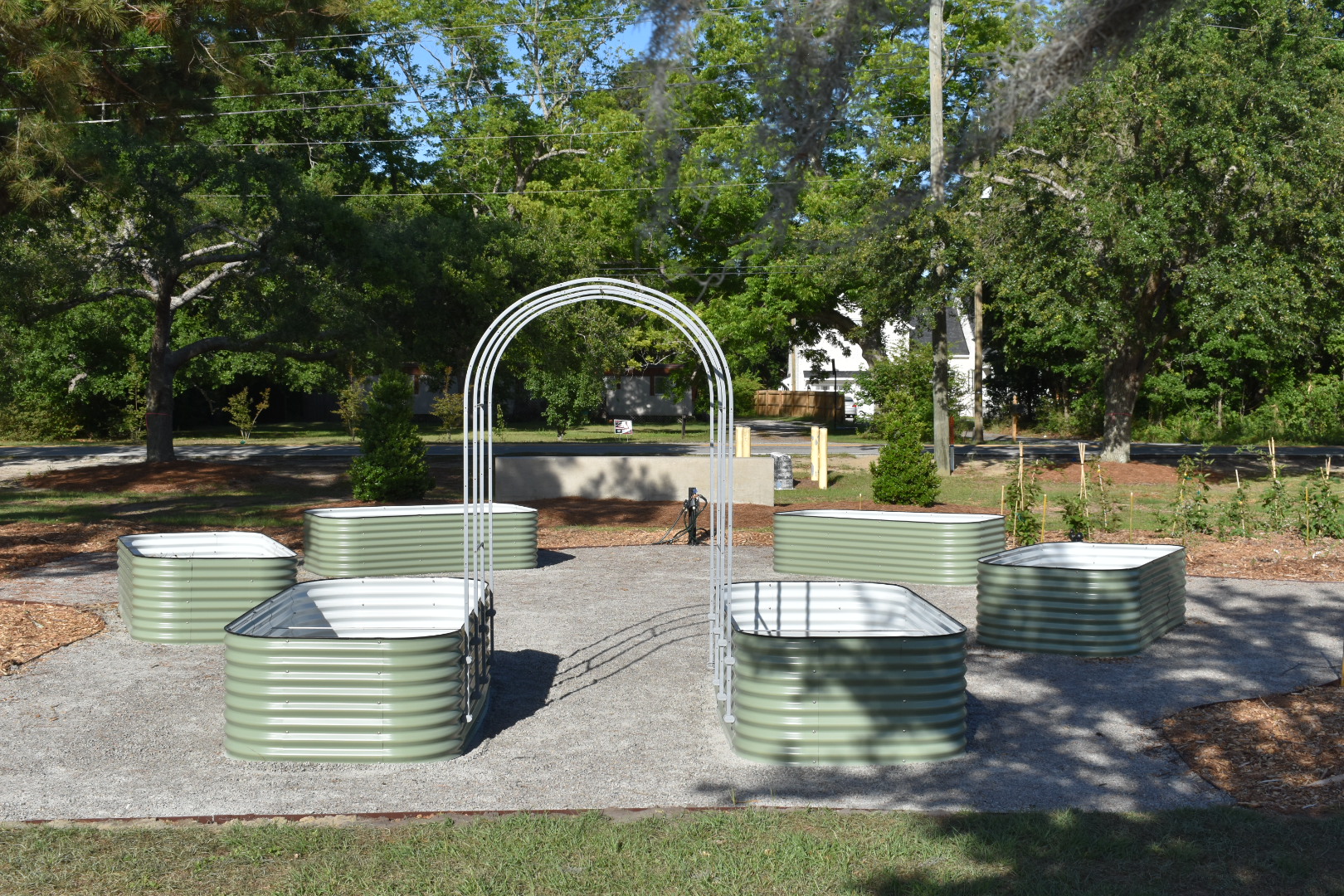
Annual vegetable beds for the community, alongside the perennial food forest.
Designed as an Ecosystem, Not a Garden
A food forest mimics the structure of a natural forest — canopy trees, understory, shrubs, and groundcovers layered so the system builds its own soil, manages its own water, and supports pollinators and songbirds while producing food. Design is what separates a thriving public food forest from an abandoned community garden: intentional paths, edges, and plant guilds keep it beautiful and easy to care for.
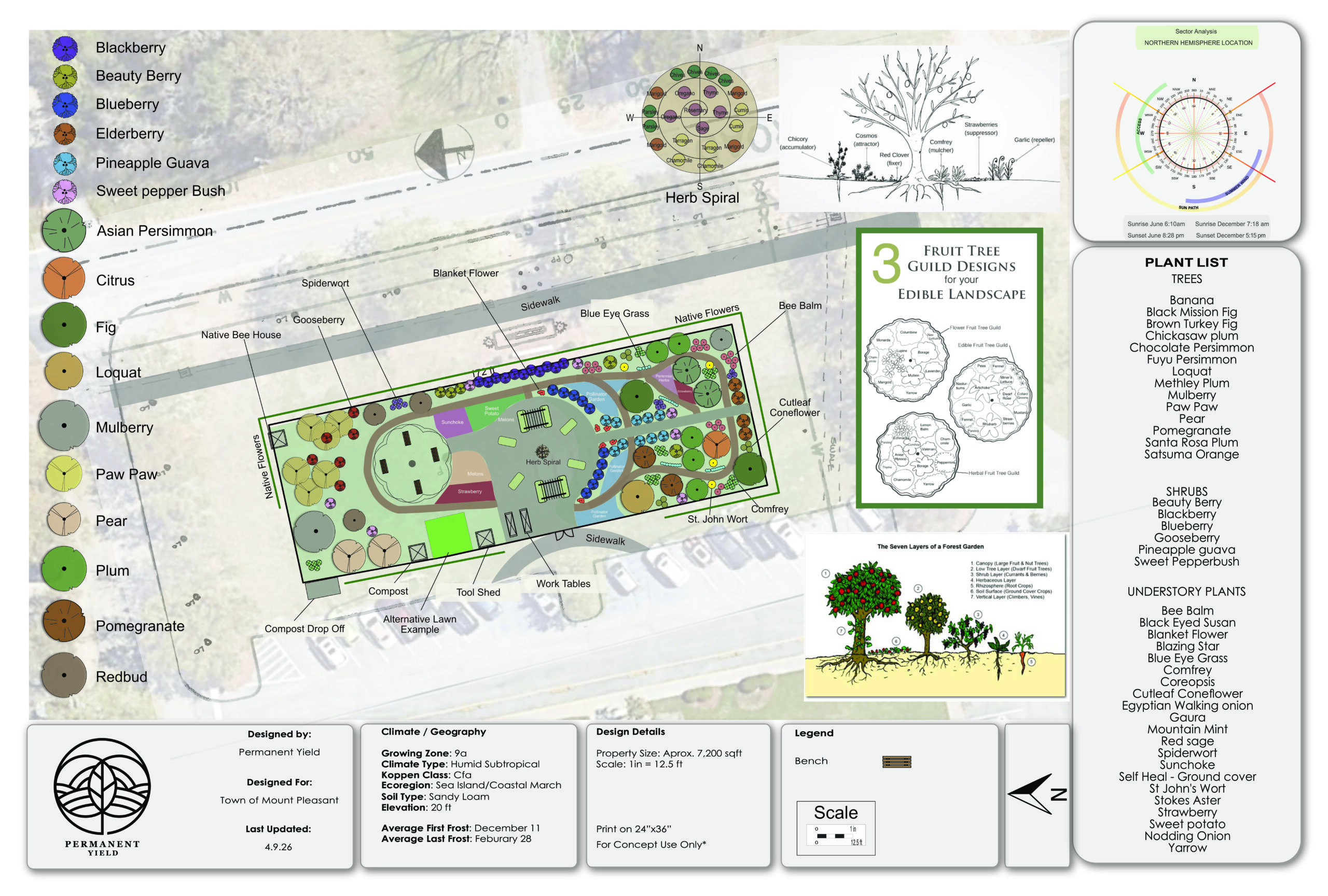
Concept design: Mount Pleasant Community Food Forest — Permanent Yield, 2026. Click to view full size.
Community From Day One
Dozens of residents of all ages put the first trees in the ground together. That’s the point: a food forest is infrastructure for connection as much as for food. The planting was covered by Live 5 News
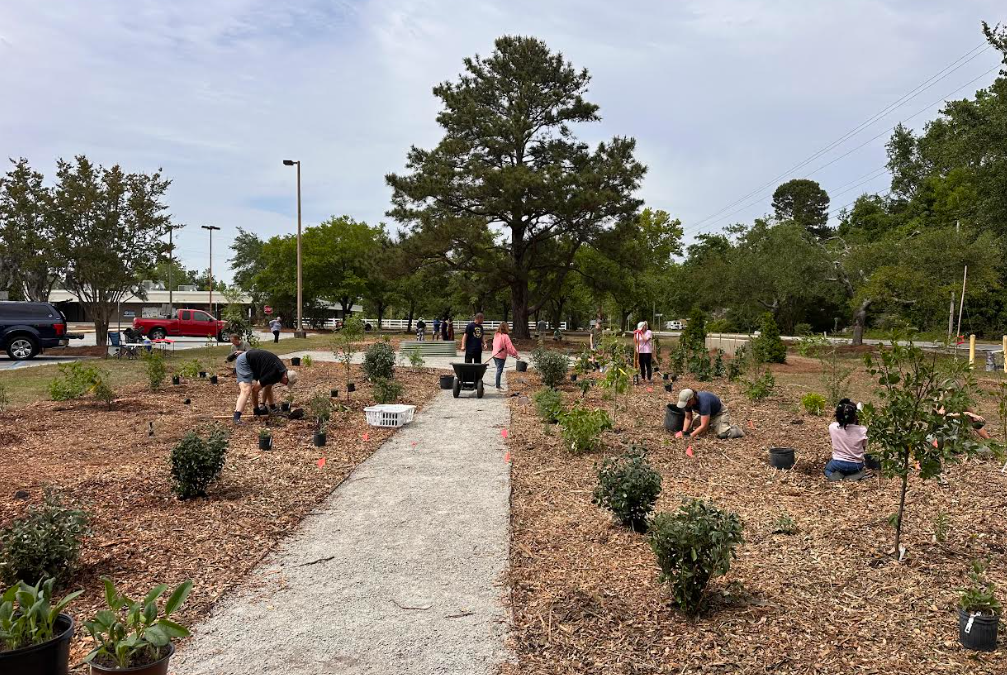
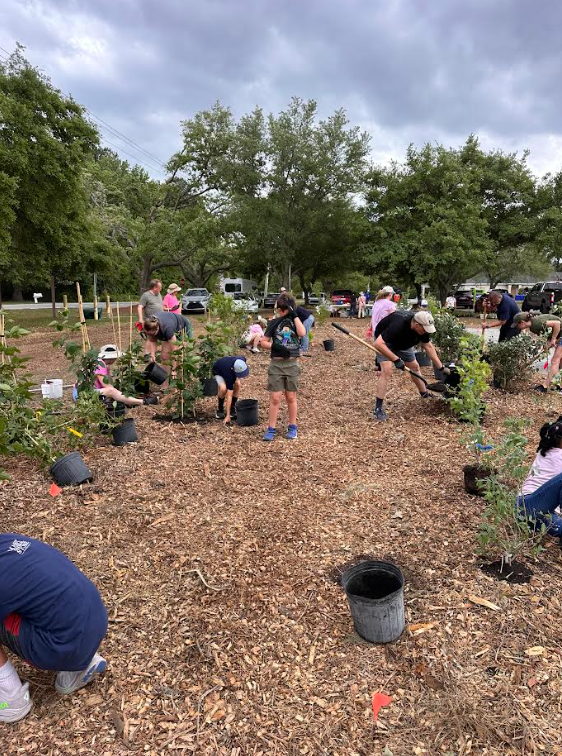
Planting day, spring 2026 — volunteers of all ages put the first trees in the ground.
Bring a Food Forest to Your Town, School, or Church
Mount Pleasant proved the model. If you’re a town leader, school administrator, or congregation looking at underused green space, we design and install community food forests built for public scale. And we stay involved through the establishment year. Start the conversation.
Homeowner? The same design principles work in a backyard. Schedule your free consultation.