From years of planting many kinds of fruit trees, there are a handful that stand out for their reliability. We have found that the best fruit trees for Charleston yards are Figs, Persimmons, Loquats, Mulberries, and Chickasaw plums. These are trees that handle our humid summers, mild winters, and sandy Lowcountry soil with little intervention. The short list below is what we plant most across Charleston the most, and why.
Figs — the Lowcountry’s easiest fruit
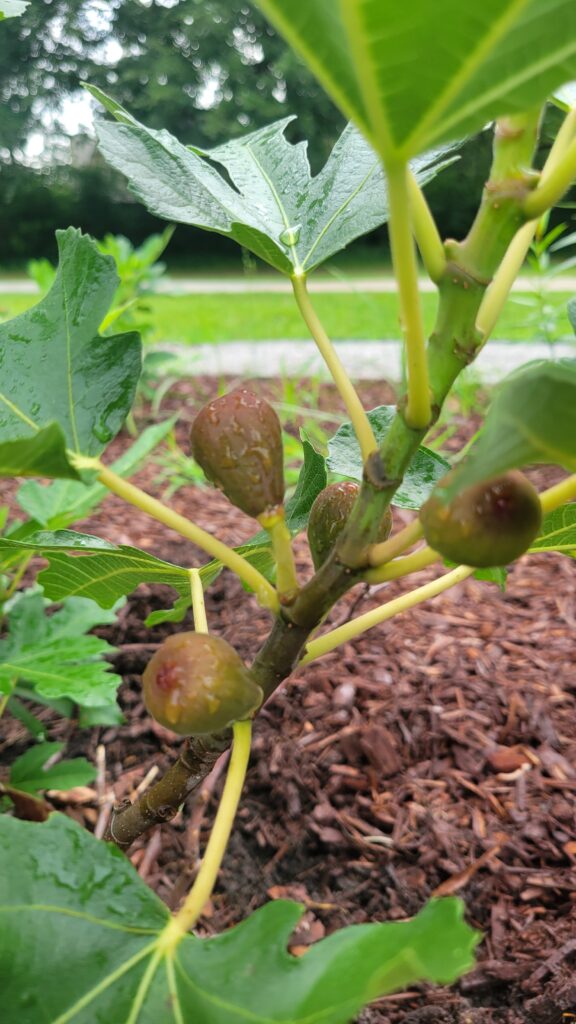
Figs love Charleston: heat, humidity, and salt-tolerant enough for coastal yards. Celeste and Brown Turkey are the proven local varieties. No spraying, no pollinator partner needed, and productive within two to three years. If you plant one fruit tree this fall, plant a fig. As an added bonus, they are one of the easiest trees to propagate. Allowing you to expand your food forest over time.
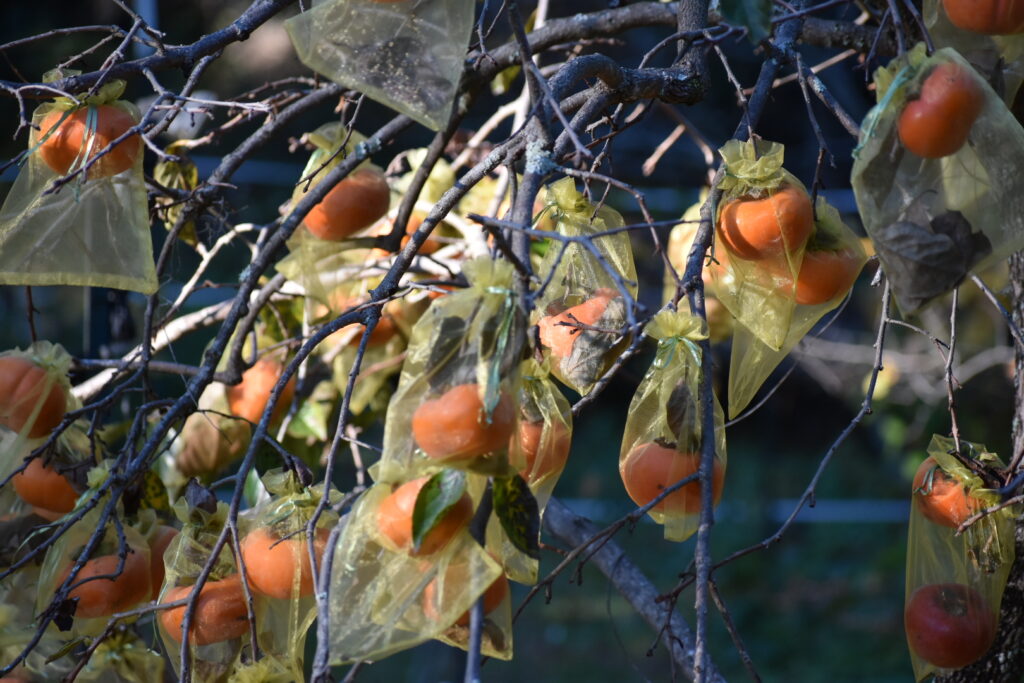
Persimmons — a late fall treat
Two great options: the American persimmon, a true Lowcountry native that feeds wildlife and asks for nothing, and Asian varieties like Fuyu, which is a crisp, non-astringent type you buy at the store. Persimmons are among the most trouble-free fruit trees in our climate. If you have the space, the American Persimmon may be your choice. Requiring a male and female for cross pollination and a mature size of 20-30′ they are great trees for larger properties. If you are working with limited space, the Asian Persimmon is a better choice. They are self pollinating and reach 10-12′ at maturaity.
Loquats — evergreen and early producers
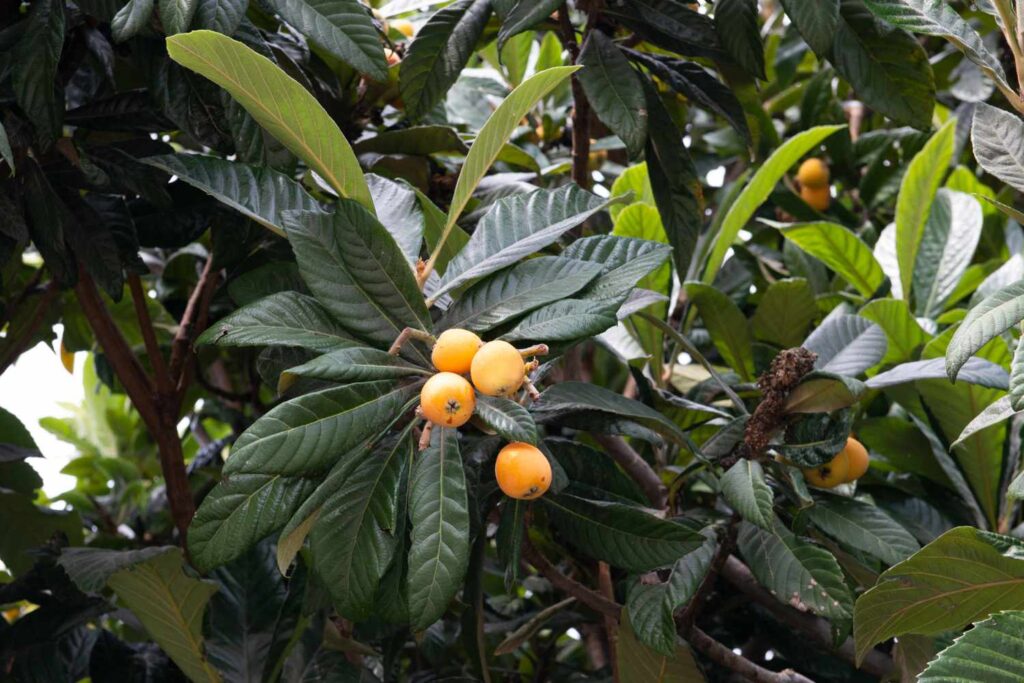
Loquats are everywhere in Charleston as ornamentals, but they’re also a legitimate fruit tree. They have fragrant fall flowers and sweet fruit in late winter and early spring when nothing else is producing. Evergreen structure makes them a design workhorse for shade, screening, and food from one tree.
Mulberries — the fastest food in the yard
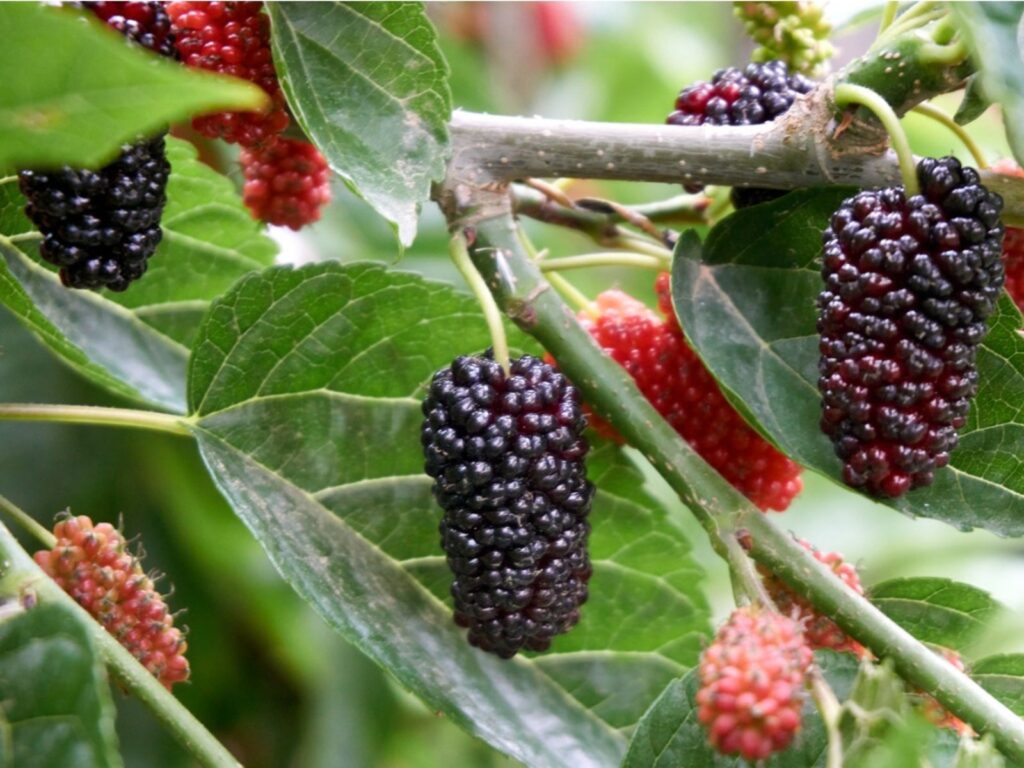
Few trees produce as much food as fast as a mulberry, and the native red mulberry supports songbirds while feeding your family. Plant it away from patios and driveways because the fruit drop is generous. There are many varieties to choose, from the six inch long Pakistan Mulberry to the native Red Mulberry.
Chickasaw plums — the native thicket plum
This Southeastern native fruits reliably, feeds pollinators with clouds of early spring blossoms, and doubles as habitat. Perfect for the wilder edges of a yard or as part of a food forest understory.
What About Peaches and Apples?
Peaches grow here. South Carolina is a peach state, but in Charleston’s low-chill coastal zone and higher humidity, they demand extra care and attention, so they’re a commitment, not a starter tree. Apples are harder still; only low-chill varieties like Anna and Dorsett Golden set fruit reliably this far south. Plant the easy wins first and as your soil matures, start to add in the trees that need a little more care.
Planting Time Matters More Than People Think
Fall and winter are the Lowcountry’s best planting window. The cool air, warm soil, and winter rain let roots establish before summer heat arrives. While the trees are dormant, growth is focused underground as opposed to above ground in the development of leaves.
Want fruit trees matched to your specific soil and sun? Schedule your free consultation and we’ll design your yard around what will actually thrive there.